Not a lot got achieved during yet-another lock-down in response to the Covid virus. This time I didn’t have the boat on my drive before hand so had to be patient and wait until travel was allowed again. Particularly difficult as the boat storage is in another county so I was having to keep an eye on the travel rules for both places. I am likely to be a very low infection risk as my NHS job meant I got a first and second vaccine shots fairly early on, knew antibody levels were reasonable from being one of the “no symptom” infection patients from the first wave and also later on was testing twice a week with the lateral flow test devices. There was also no risk of being within 2M of other storage site users. However you still have to try and behave yourself and not travel unless you absolutely need to.
By early May I had finished repairing a split in the fiberglass cladding on the starboard bilge keel. I used the standard procedure where you grind away the damaged material until you reach sound structure, ensure there is a suitably tapered edge to the removed area then apply multiple coats of mat and resin until the middle of the repair reaches the same level as the original surface. I still do not know why there was a crack in the surface as it didnt seem to go full depth of the laminate covering. In this case the subsequent removal of excess fiberglass and eventual fairing to get a smooth finish were made difficult because the edge of the support tray, trailer wheel and mudguard were all in the way of using power tools. An old “Surform”, woodworking rasps and patient sanding did the job though.
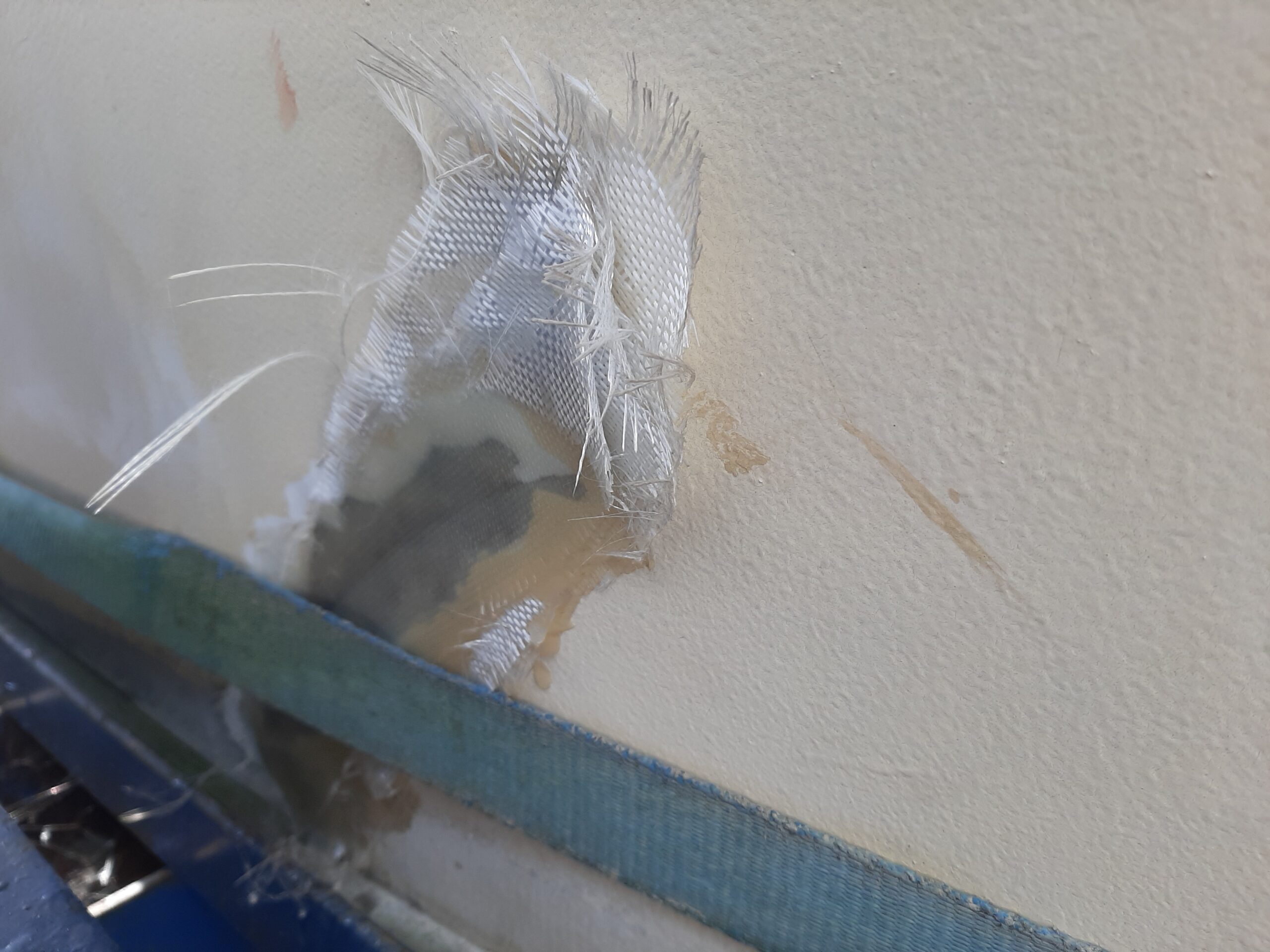

Having got that all done I added two coats of tie coat which is intended to stick the antifouling onto the underlying structure. These pictures are the first coat which is still wet so looks a little patchy
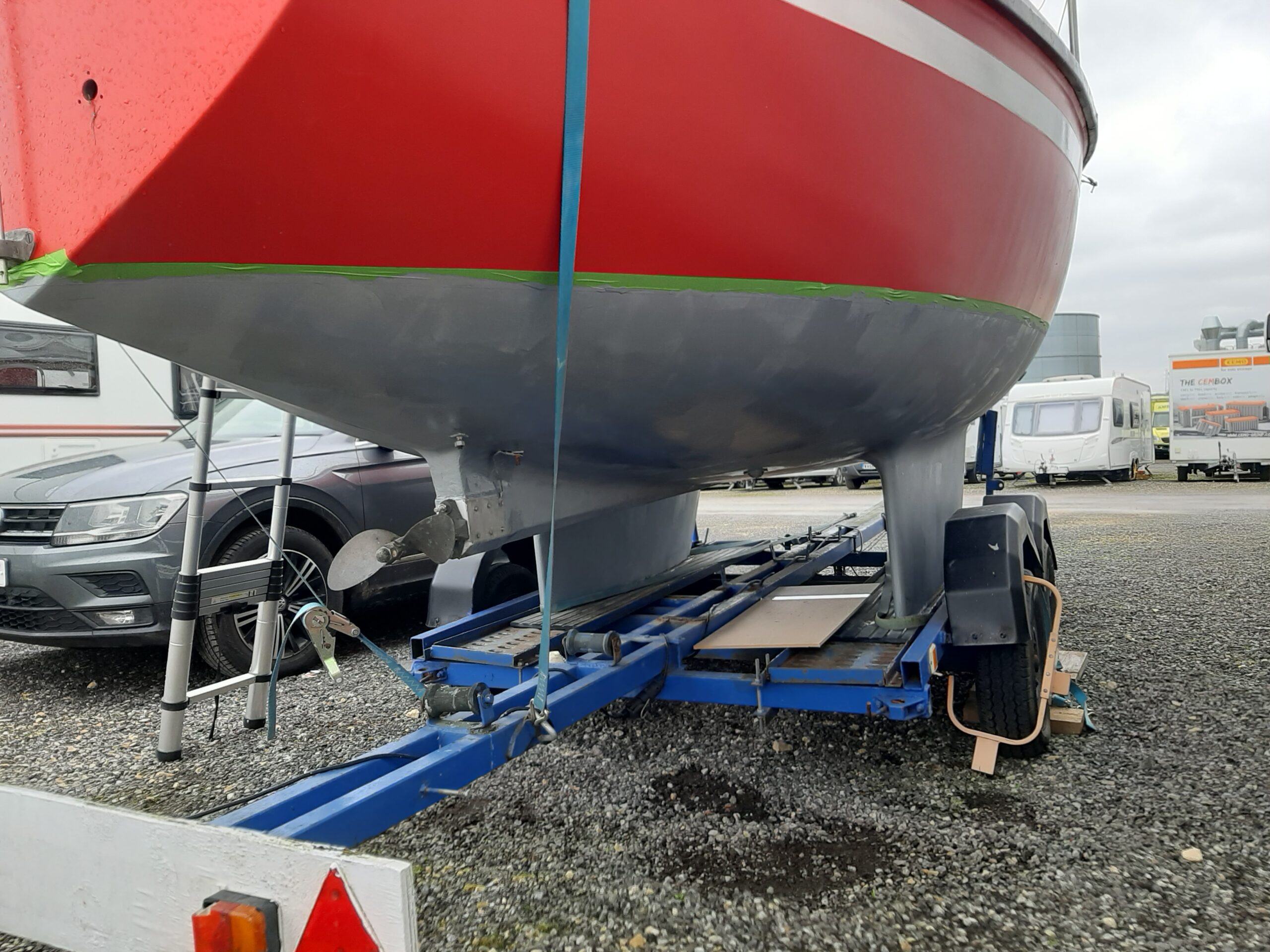
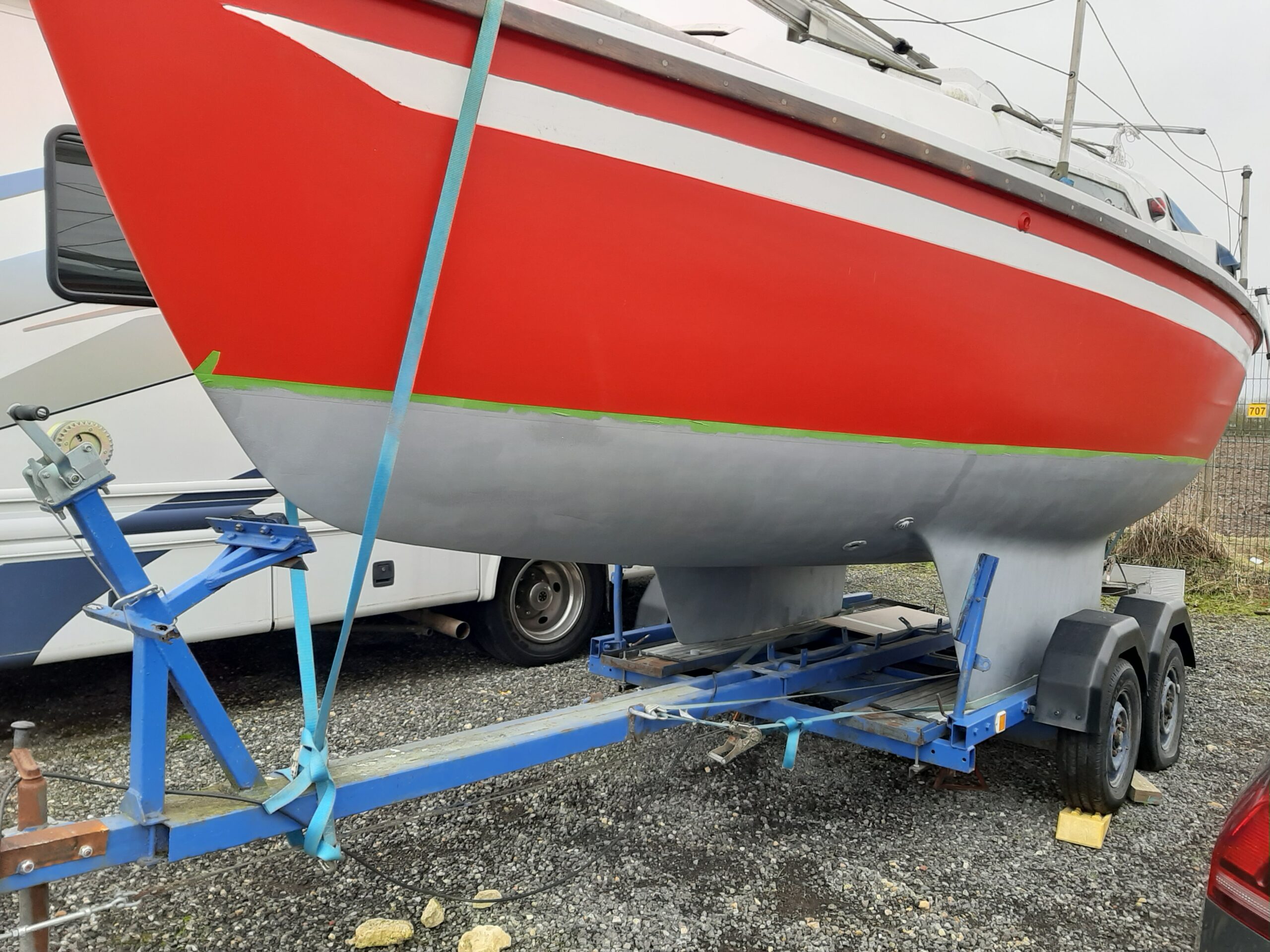
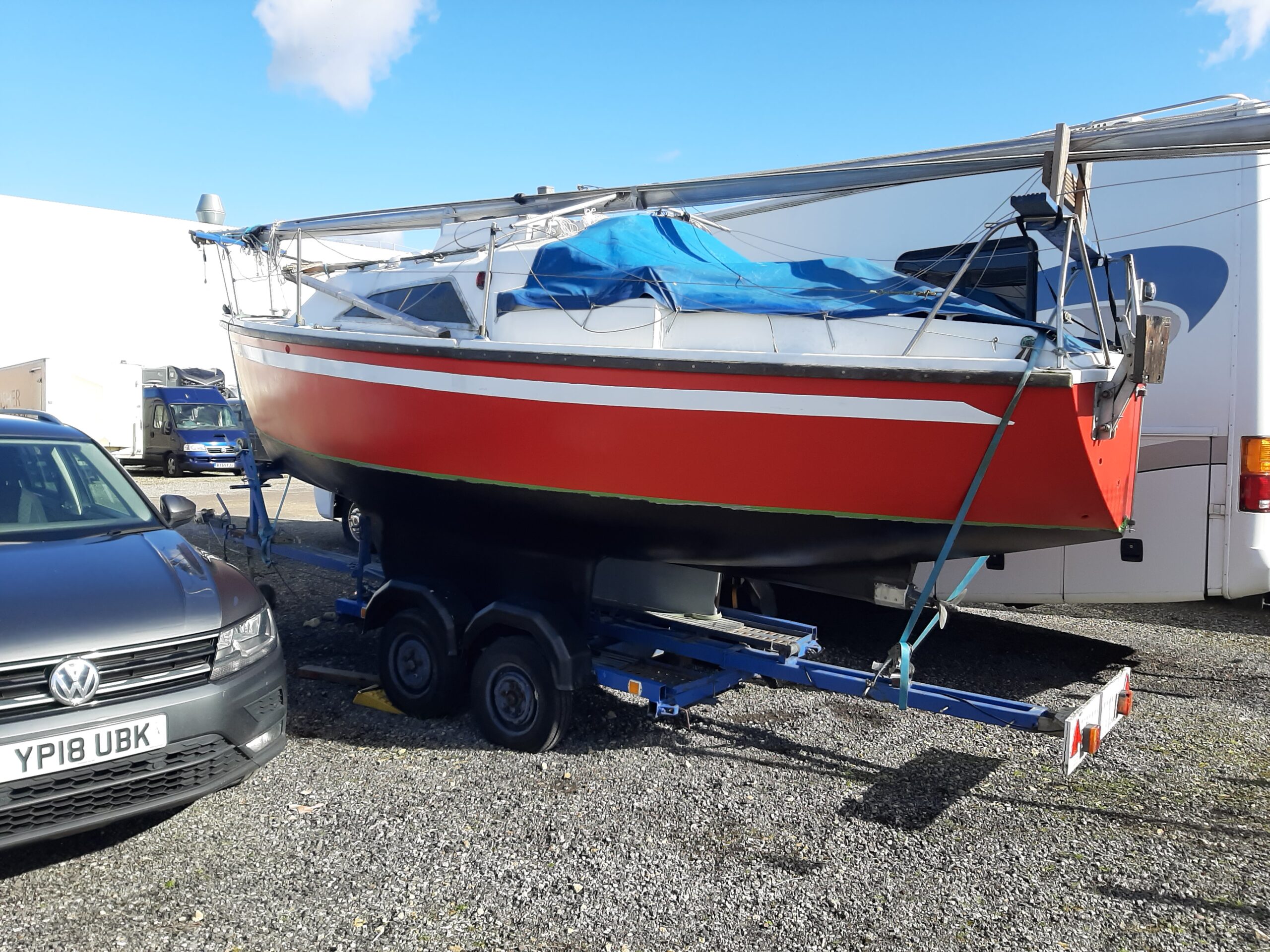
Now there is also one coat of black antifouling which looks pretty good against the red topsides. – I think we can stop thinking of Rathenice as an “ebay wreck” now and she looks even better without the masking tape.

I also noticed that my revised companionway boards were showing signs of water damage already. Part of the problem is that I had exposed end grain of the plywood on all of the edges and also that the cabin wall has a forward rake which means any moisture running down the top board can get into the gap between the two parts and stay there for long periods.
All cause for a quick revision – Now both boards have a 24 mm wide strip of oak to cap the plywood on all exposed edges. Of course that meant sawing off the edges that were beginning to distort so the oak is glued to un-damaged marine ply.

The joint between the two boards is now angled at 45 degrees with a lip on the top of the lower board to encourage run-off and dripping rather than continued flow down the front face. The bottom of the upper board also fits between the two edge strips of the lower one to prevent water running down between the boards and the edge of the opening.

All the woodwork is glued with the “oak” epoxy glue and the first coats of finish were done with penetrating epoxy which should have sealed all the edges much better than the yacht varnish had achieved on the first attempt at the joint.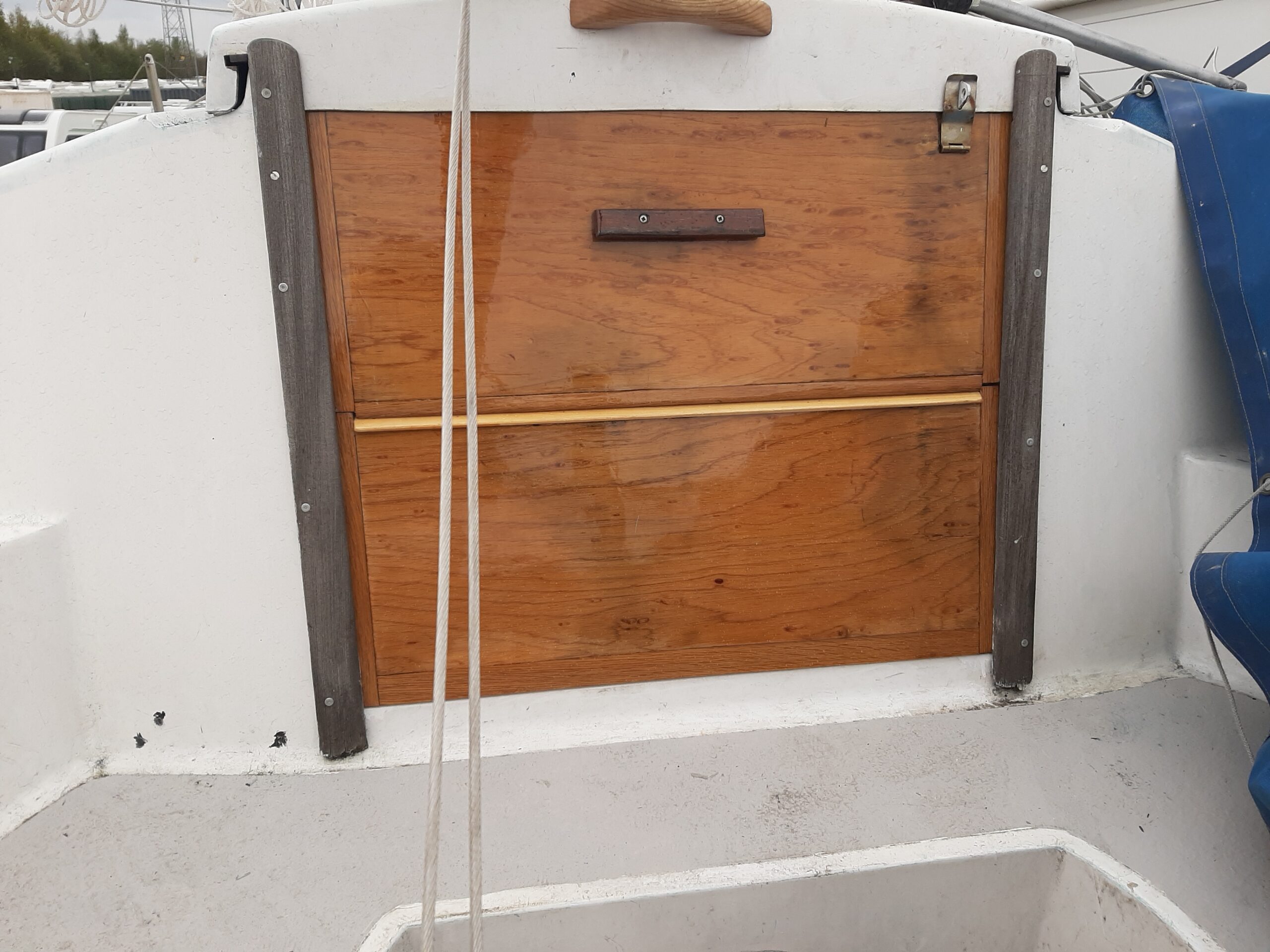
Inside the cabin there was also progress with the galley as the gimble plates for the cooker finally arrived and

were fitted to oak blocks which provide the spacers between the cooker body and the cabin structure. Having a swinging cooker also meant the gas pipe could be connected. There is not yet a locking mechanism to stop the cooker swinging but the reality is that such a thing is probably not really needed on a small cooker compared to the much deeper ones equipped with an oven below the grill.
Typically the good weather suddenly turned wet and cool as soon as the need for a full lockdown eased and everyone was let loose. Unfortunately that was also when the builders decided to connect a lot of new power cabling to connect the new phase of the building site. As a consequence we were suffering several power failures each week and one of the outages zapped our computer. The electronics card of the hard disk is now completely dead. A fair amount of time and investment later the hard disk has been replaced with a solid state system drive and a much larger data hard disk. Instead of windows 10, the desk top computer is now running as a clone of the Windows 7 laptop and even though the hardware worked fine before it is now refusing to upgrade to Windows 10 again. At least that got it working again rather than having to pay the extortionate costs of a “new” computer which might well not be usable with the future release of Windows 11. I also seem to have lost the high capacity memory sticks that I backed up many of my files to so have not got all our data back yet.
I am still trying to recover the data off the original hard drive without any success so many of the old bits of my boat restoration diary are now lost along with the digitised versions of all the family photo albums. The bits of boat related documents that made it into this blog, the photos on my current phone and a few sections of the diary on various smaller memory sticks are all I can currently access.

By the start of June the solar pannel was completely installed and charging the batteries which meant I could finish making and fitting the port side cabin headlining as well as making progress with fitting the locker tops in the cockpit.